Books Read- 203 Books to Read-282 Percent Complete- 41.86%

Just Finished (For the third time) - 'Mirror Dance' by Lois McMaster Bujold
Showing posts with label Hugo Award. Show all posts

Sunday, December 8, 2013

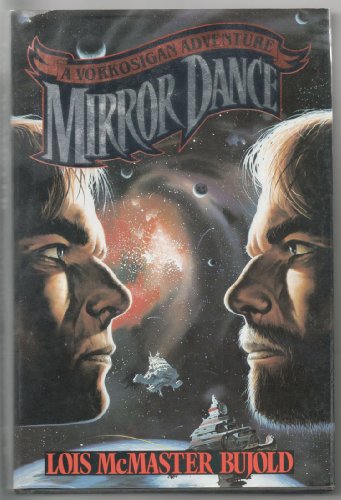
1995 Hugo Award Winner- 'Mirror Dance' by Lois McMaster Bujold

Mirror Dance
The entire Vorkosigan series is a fun read, Bujold plays with a bunch of old SF tropes like faster than light travel, interstellar war and empire, new technology, and a lot of pre-existing SF stereotypes.  But, she manages to make the whole thing fresh enough to keep the reader interested.  One of the best things about the series has been watching Bujold grow as a writer, 'Shards of Honor,' the first book in the Vorkosigan Saga, was published in 1986, so it's not much of a shocker to say that Bujold has changed as a writer since then, it was almost thirty years ago.


'Mirror Dance' comes right in the middle of the series, published in 1995 Bujold was beginning to break away from the standard Galactic Warfare plotting of the previous novels, and really the books that come after Mirror are much more focused on character than the ones previous.  Mirror sees Bujold really stepping into her own as a writer taking on much more of a challenge than she had before.

Two characters dominated the Vorkosigan Saga prior to Mirror, Cordelia Naismith and Miles Vorkosigan.  Both are interesting and compelling characters in their own right, but neither really stands out as groundbreaking as far as SF is concerned.  Miles, the diminutive protagonist for most of the series is a fan favorite character, and makes for good reading, but the idea of a handicapped individual overcoming long odds to achieve greatness is such an SF cliche that Philip Dick was sending up that trope back in the sixties with 'Dr. Bloodmoney.'  Cordelia, on the other hand, playing the fish out of water is the strong female character that (I'm happy to see) has always occupied a place of pride in SF.  I think Burroughs brought her out at the turn of the century.

And so what if these characters are cliches?  Bujold does great things with them, and writes incredibly compelling books.  If these were the only two characters to drive the series it would still be deserving of all the accolades piled on it (10 + Hugo and Nebula Nominations, with five wins).  SF has a big sandbox, it's nice when authors create something brand new but it's not absolutely necessary.  There are still great books to be written treading the ground that the SF Masters laid down.  No matter how many books may have been written on any given subject, there's always room for one more good one.

Prior to Mirror it seemed that the entire Vorkosigan Saga would fall into that category, playing with tropes that had been kicking around SF for years.  'Mirror Dance' delved deeper into the world Bujold had already created, and kicked a few characters up a notch.  By the time I had read up to Mirror I was trying my best to read the series in order, and I have to say I was wholly unprepared for what was inside.

The character of Mark Vorkosigan had appeared earlier in the series, 'Brothers in Arms' was a decent novel. It wasn't nominated for any awards, and though I wouldn't call it a bad book by any means, it retread more of the same ground from the previous novels introducing a far-fetched plot for Miles to solve and delving a little deeper into the soap opera half of Bujold's space opera series.

There was no hint that Bujold would introduce so much depth to the character of Mark, that there even was so much depth to the character.  He is something I had never seen before in SF.  There are plenty of confident, heroic characters spread all throughout any SF library, it's rare to read about characters with actual neurosis, truly conflicted characters with genuine flaws.

Bujold has never shied away from complicated subjects, which is perhaps what makes the Vorkosigan saga so interesting.  Homosexuality (never a very taboo subject in SF but still a difficult thing to sneak into literature in the mid 80's), rape, sex, all of these things had shown up in her writing before Mirror.  Bujold goes to an incredibly dark place with Mark in this novel, without shocking the reader for the sake of itself she shows what a lifetime of neglect and abuse might actually do to a person like Mark.  It makes for a great read.

Bujold's Vorkosigan series straddles the line between soft and hard SF (whatever that means), but it's the 'sort' side to the novels that keeps me coming back, the characters.  It's a joy for the readers to keep coming back to these characters, to see them grow and watch their motivations change as they age.  As much as I enjoyed the first books in the series it's 'Mirror Dance' that is my favorite, and the character of Lord Mark I'm always waiting to see in each new book published (though he doesn't show up as much as I'd like). After Mirror I'd have to say 'A Civil Campaign' is high on my list, and that book has no action at all.  I don't know if anyone has actually complained about the drop off in action in the series, the latest book might have well have been called "Ivan Finds a Wife," and I loved the hell out of it.

You can start this series anywhere, Bujold didn't even write all the books in chronological order, there's no reason to read them in order, but for anyone starting the series I'd recommend putting Mirror off as long as you can, just to save it for later.

Anyone looking to purchase this book can find it here for pretty good value.


Friday, February 8, 2013

1991 Hugo Award Winner- 'The Vor Game' by Lois McMaster Bujold

I had a hard time figuring out where to start my reviews for Bujold's Vorkosigan series.  I bought 'The Vor Game' a few years ago and found out it was part of an ongoing series, and normally I set those books aside and try to get the entire series so I can read them in order.  I started doing research on this book later and then couldn't figure out where the series started.  I felt like an idiot, but the series seemed to have no definite beginning.  The problem is that Bujold didn't write her series in order, she had the books written but couldn't find a publisher for the first few novels, then she would jump back and forth in chronology filling in different gaps in the story.  The other problem with this is that Bulold's writing gets stronger as she writes more books and she begins to tackle more complex narratives while not necessarilly further down in chronological order.  It can make for a complicated series to jump into.

So just forget it, chronological order is not important to the series.  There's a few points where you'll want to have read some of the other books before certain other ones (don't read 'Mirror Dance' before 'Brothers in Arms') but if you just read the books in the order written you'll be fine.  I didn't do that, I jumped around a little bit with the books, then went back and finished off most of the ones I hadn't read.  I didn't just stick with the Hugo and Nebula nominees (of which there are quite a few), and I still have a few of the novels to finish off.  The important thing is to remember that however daunting the series can look like as a whole there's really no bad place to start reading.

As far as reviewing these books instead of doing this in series or chronological order I'm going to review the Vorkosigan saga in the order I read them.  I finished Vor Game about a year ago, and it was such an entertaining read that I quickly grabbed the rest of the series.  At first I used them as quick filler reads between other novels, but after I read 'Mirror Dance' I started to find the series compelling enough to shove everything else to the side until I'd finished it off.  I'm still sitting on 'Cetaganda' and 'Borders of Infinity,' as it makes me sad that I might soon run out of Vorkosigan novels to read.
 
The series is just a lot of fun, and Bujold has handled it well.  The characters age and grow, the plotlines increasing in maturity with the age of the people who inhabit them.  The character of Miles Vorkosigan has been talked about in a lot of reviews, but it's worth saying that he's a lot of fun.  I really like that as a reader we've been able to watch him grow from this young kid desperate to prove himself in novels like Vor Game into this older man who can look back wistfully on his life in 'Cryoburn.'  It's just a lot of fun, and kind of a new way to handle this, in a different authors hands we might still have Miles Vorkosigan bouncing around space getting into adventure, with no explanation for why he has become Peter Pan, forever the same age.
 
'The Vor Game' might not be the most serious novel in the Vorkosigan Saga, and throws back a little to 'Shards of Honor' by feeling like a loosely connected group of short stories rather than one longer narrative.  Which it is, the first few chapters was previously published as the short story 'The Weatherman.'  This opening story deals with Miles' first military posting on a frozen crappy world.  The story follows up with a second half in which Miles is arrested and has to rescue his emporer.  Later he ends up foiling an invasion plot and gets his mercenary army put on secret retainer for Emperor Gregor.
 
So maybe this isn't the best place to start reading the series.  Reading that last paragraph makes the story sound too complicated a place to start the series.  It would have been nice if I had known who Emperor Gregor was, or who the Dendarii Free Mercenaries are.  But, this world isn't rocket science and it's not that hard to jump into the middle of this story and figure out what all the pieces are.  There's an outer space army that Miles' alter ego is in charge of, there, now you're caught up to speed.
 
This is just a really fun read, along the lines of John Scalzi's 'Old Man's War' or Corey's 'Leviathan Wakes.'  If someone liked either of those books they're going to like the entire Vorkosigan series.  The character of Miles has the right attitude to carry off this sort of grand space opera without limiting the scope or trying to overly humanize the large action pieces. 
 
While the Vorkosigan series as a whole does get to places where it will have important statements to make about life or ethics, this book does not press the issue so much.  Instead Bujold uses Vor Game to expand this universe and tell an entertaining story.  There's not much else to say about the novel, it's entertaining, and occupies a space in the life of Miles Vorkosigan where he is in between roles and still discovering who he is.  It aims simply to entertain and it does the job marvelously.

Saturday, February 2, 2013

2005 Hugo Award Winner- 'Jonathan Strange and Mr. Norell' by Susanna Clarke

This is a big book and it took me a little longer than normal to finish.  I wasn't aware of it at the time but apparently this book is fairly famous, moreso than your average Hugo Winner.  The publisher, Bloomsbury, did a pretty hard press on pushing the book onto the public, at least that's what most of the reveiws said.  There may have been a reason that in my mind I always associated it with the Harry Potter novels, because it hit the market at just the appropriate time for a novel about British Magic, right after the Potter novels were published, and Bloomsbury was also the publisher for Rowling's books.  So, though deserving in it's own right, Strang and Norell did ride the coatails of Harry Potter to a certain degree of fame.

I really did like this novel a lot, though I guess some people are put off by the length of the book, the tone, or the impressive amount of footnotes.  It's made a lot of lists for being one of those novels people pretend to have read.  I don't know if someone should go out of their way to lie about having read it, but I will admit that it's a pain in the ass carrying this book around with you, and I can't imaging someone trying to read a few pages on a bus or train, the thing has some weight to it.  I should have sucked it up and read this on my Kindle.

The tone of the novel reminded me a lot of Connie Willis' work, perhaps because of the very Britishness of it.  Clarke really get into the historical side of things, and even introduces a few real life characters like the Duke of Wellington.  Both writers are willing to bide their time and let the story wander in order to build setting and tone.  This can be a bad thing for some readers, and many reviewers voice complaints about the slow moving story, for both authors.  Willis' work can sometimes irritate me, but she always seems to pull it back together with her stellar conclusions.  I had no complaints about Strange and Norrell, the novel takes it's time, but all of it is worth it, and I didn't go into the novel expecting to be finished in a day.

Several of the reviews I've read have described the book as 'Historical Fiction,' 'Magic Realism,' and 'British Comedy.'  Though the novel really defies categorization, Clarke does a good job of avoiding some of the major pitfalls of these genres, while at the same time utilizing what makes them good.  Yes, this can be seen as an alternative history novel, which I usually don't like, but instead of my usual boredom I was excited to see the true life characters like Wllington make an appearance. I enjoyed how Clarke crafted her magic, and while she did make it almost omnipotent in utility I felt it stayed true to the world Clarke had crafted and contributed to the story.

At first I was shocked that this is Clarke's first novel, but now I've found out that she had been working on it for over a decade.  It seems sad, since she has crafted such a complete world, that we will not be revisisting it any time soon.  An author as slow and deliberate as this will not be cranking out a book a year, or writing a long involved series.  Strange and Norell does stand alone, but throughout the author raises enough questions that another novel wouldn't necessarilly be pandering, there's more than enough left to explore in a sequel, I just wouldn't expect it anytime soon. 

One of the plot points that Clarke left open (other than the ending) was the fate and truth about John Uskglass.  I continue to feel that I am missing something and a closer read of the novel will reveal where he actually went and why he left England.  Perhaps it is meant to be just a mystery, but I feel like Clarke knew exactly what she was doing with the character, and is unwilling to leave anything to chance.  The author leaves several of these strings dangling off her story, like mentioning in one of the footnotes that Wales has been hidden from public view and is now considered a myth, but it is not as irritating as it sounds and goes a long way to building the world the characters inhabit.  I just wish I could get to the truth about Uskglass, maybe someone has a better idea than I do. 

I felt like the character of Vinculus was trying to say that Uskglass' magic had guided all the action of the story, but that would seem to imply that The Raven King had to plan hundreds of years in advance to defeat the man with the thistle down hair, something we already know not to be true as Uskglass is the king of the fairies (If you are trying to read this review before reading the book I won't even mention that was a spoiler because I totally lost you there.)  Though the end of the novel seems to imply that Uskglass views Strange and Norell in the same way a person views an ant, their summoning of Uskglass obviously works and like Vinculus says, they are all living in Uskglass' magic.  Anyway, I just finished the novel yesterday and I'm still trying to parse out where all the characters ended up.  Maybe I'm devoting a little too much thought into this but I feel like I missed something and wish someone would point it out to me.

So despite being a long and intricate novel this is actually a pretty light read.  Other than a few light criticisms about class distinction (which I don't think anyone is defending anyway) the author has no deep or powerful message to convey to the reader, just an interesting and compelling story, and that's not a bad thing.  Most books that aim simply for fun and entertainment are not nearly as long as this one, nor as complex.  The marvel here is that Clarke is able to keep the reader pulled into the story without losing any of our interest over the seven hundred pages of the novel.

There are several other good reviews out there for this novel, and the only bad ones I've seen have complained about the length, the British tone of the novel, or the lack of action.  People should realize what they're getting into when they open this book, and if you aren't a fan of involved descriptions of 18th Century England I'd steer clear of this one.  But if you don't mind taking a slower and more deliberate look at characterization and story progression, this is just a great novel to read.

Thursday, December 13, 2012

1993 Hugo (TIE) and 1993 Nebula Award Winner 'Doomsday Book' by Connie Willis

'The Doomsday Book' by Connie Willis tied for the 1993 Hugo Award with Vernor Vinge's 'A Fire Upon the Deep' and won the 1993 Nebula Award outright.  This novel is the first full length novel in Willis' Oxford series, there is a short story, "Firewatch," that comes before the novel but really each one is a stand alone work that doesn't need too much back story. I would recommend that anyone interested in the series start any place but 'Blackout/All Clear,' and only because the impact of that novel is increased by having some knowledge of how the universe works. 

This series of books deals with time travel, and a very specific sort of time travel.  Willis takes the tack that her characters can travel back in time, but they cannot alter anything that has already happened.  In Wills' universe the past is fixed, any time travelers that were planning on going backward have already been there, and thus there can be no changes to the timeline.  In many ways the rules of Willis' time travel reminds me of Asimov's 'Three Rules of Robotics' in that they occupy such importance in the novel that the author runs the risk of writing the story about the mechanics (like Asimov started to do) and not about the characters (like Willis always does).  Anyway, the rules of the universe are complex, and in order to make sure that nothing is altered in the past the time travel device almost takes on a personality in the story, malfunctioning at highly coincidental times so as not to allow a paradox to take place.  Further novels in the series deal more with the mechanics of Willis' time travel device, but never to the detriment of the story.  Previously I've described this form of time travel as the least original, relying somewhat on the concept of 'fate.'  If a person goes back in time but their action is all set in stone because it's already happened there's normally not much chance for an interesting story, but it's a credit to Willis' writing that she makes it both believable and interesting.

Willis has a different way of writing that at times can seem at odds with the subject matter involved.  Doomsday has a tone that is reminiscent of the 'comedy of error' plays, almost like an Oscar Wilde type of thing that's actually pretty funny.  The entire first half of the novel is heavy in this tone, and many readers have complained about it.  Willis uses it to her advantage though, and if you have read any of her other writing you know she affects it only for this series, and in the end it serves well as the light tone ends up complementing the dark subject matter.

Willis has definitely done her homework when it comes to any of the Oxford series, unfortunately, I have not.  I cannot speak about how accurate any of her statements might be.  I have no idea what life might have been like in Medieval England, so when she refutes what seem to be some established facts about the time period I tend to just take her word for it.  What I can say with certainty is that Willis brings that period to life, you really get a feel for what it would be like to inhabit Willis' idea of Medieval Europe.  It may not be what life was really like at the time, we won't know until Willis' time machine is a reality, but it feels real.   The characters are real people, and her slow paced writing style really lets the story flesh the characters and setting out to their fullest potential.
Willis bides her time with the story, almost to the point of irritation, before she rushes for the close.  Even reading the back cover of the book will tell the reader that the time travel portion of the story contains a young woman trapped in the Medieval Ages, trying to survive the Black Death.  This aspect of the story doesn't even begin until almost halfway through the novel.  Up until that point the novel really meanders, allowing Willis to build the characters and settings that will inhabit the next few novels in the series, and affect the reader so greatly in the second half of this novel.
Because this novel will affect you.  If the first half of the novel can be described as a wandering comedy of errors, the second half can only be called a heartbreaking tragedy.  Willis is merciless with her characters, and the realism she works so hard to establish in the first half pays off in the second.  It's no easy task to create realism in a novel about the black death, and I'm tempted to say that it may have been more difficult for Willis to write these passages than it was for us to read them.  It's not difficult to see where a novel involving the greatest plague of all time is headed, and it's not good.
You only ever get to read a novel for the first time once, and even in a review where I assume you've already finished the novel I'm reluctant to talk about the end out of fear I might ruin the end for someone.  I will say however that I have never been so emotionally crushed by an ending that, thematically, was absolutely necessary for the novel to work.  Willis took no shortcut in getting to the conclusion, every bit of it was earned through character development and story structure, so while the end of this novel may be both harrowing and deeply moving, none of the emotional content of the story comes from the sort of twist ending or shock that you almost expect these days.

Many readers have stated that they never made it through the first half, or cited it as the reason they didn't like the novel.  That denies Willis' skill as a writer.  She uses the first half of the novel to set the stage for the second half.  Too many authors use death or danger to their characters to add weight to a story, without taking the time to make the reader invest in those characters.  Willis is willing to spend half her novel making us care about these characters, and if the reader can make it through that portion (I hate to put it like that) then the payoff is huge.
It's no wonder that this book has won so many awards, it is a deeply moving classic work of science fiction that has been able to attract readers that do not normally follow the genre.  Willis is a constant nominee for many awards, and every novel in the Oxford series has won the Hugo award, and all but one have won the Nebula award.  She is one of the few authors to have multiple novels receive both awards, and there is no question of why.  'The Doomsday Book' has a lot to recommend it, and I can't praise it highly enough.